
New Year's Eve falls on December 31, the final day of the Gregorian calendar year. Countdown customs, gatherings, and public celebrations vary widely, and other cultural or religious calendars mark their own new years at different times. A common date does not make every person's ending feel the same.
The evening can bring anticipation, relief, sadness, or no strong feeling at all. Those reactions need not be corrected to fit the mood of a party. A year contains unfinished work and ordinary moments as well as events large enough to name; an honest reflection can include all of them.
Celebrate in a way that suits your circumstances and make sensible arrangements for getting home. Or keep the evening quiet. Write down one thing you want to carry forward and one burden you are ready to loosen. Midnight changes the date; living into the next day happens at a human pace.
The next year begins with a date; a new direction begins with a choice.Original editorial reflection
YOUR OWN REASON TO CELEBRATE
Does this day mean something to you?
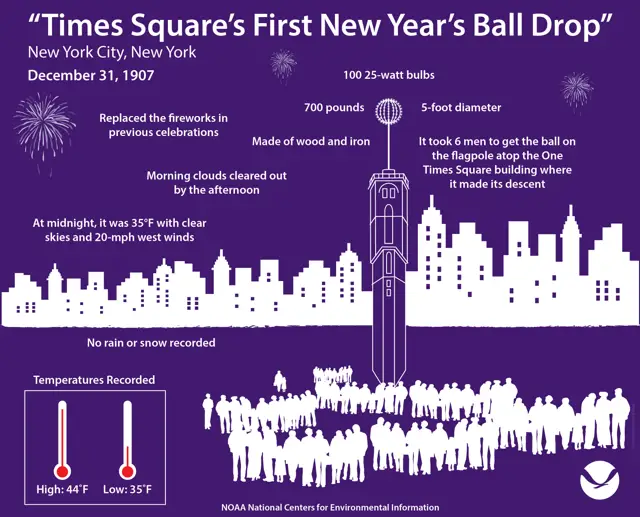
ALSO ON THIS DAY · 1907
A ball drop becomes a new-year ritual
The first Times Square New Year’s Eve ball drop took place on December 31, 1907. A device created for one public celebration became a recognizable recurring ritual. Its endurance illustrates how a practical event arrangement can acquire a shared emotional meaning. The countdown is not an ancient universal custom, but a tradition with a specific place, history, and changing technology.